
Tree Value Calculator: Understanding the True Worth of Your Trees

By A Board Certified Master Arborist | Published: April 25, 2025

Quick answer: Arborists find a tree’s value with the CTLA Trunk Formula. They take the trunk area, multiply it by a unit tree cost, then lower it for the tree’s condition and site. For example, a red oak 30 inches across in good shape (90%) with somewhat limited root space (85%) is worth about $23,000 at the Mid-Atlantic rate of $43 per square inch. The calculator above gives a rough value for your own tree.
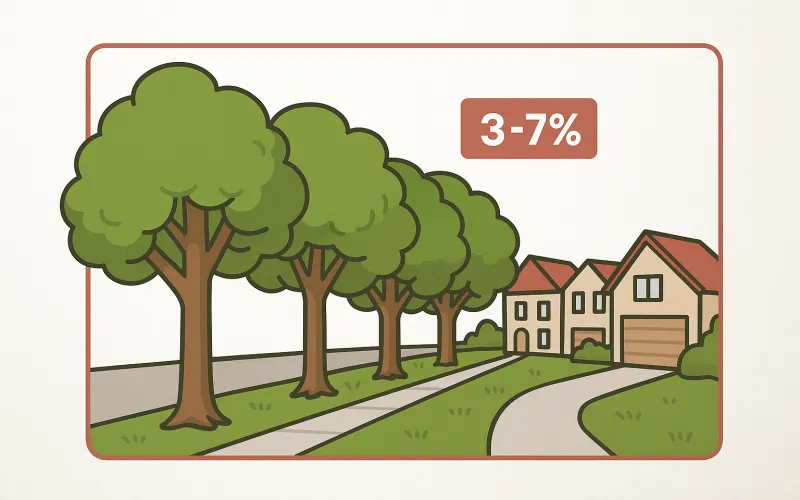
Mature trees significantly increase property value while providing numerous environmental benefits

Have you ever looked at the majestic oak tree in your yard and wondered what it’s actually worth? Beyond the shade it provides and the aesthetic appeal, trees represent a significant financial asset that often goes unrecognized by homeowners. As a Board Certified Master Arborist with over 15 years of experience, I’ve assessed thousands of trees and helped homeowners understand their true value.

In this comprehensive guide, we’ll explore the various factors that determine a tree’s monetary value, the environmental benefits trees provide, and how professional arborists calculate these values using industry-standard methods.

Why Tree Valuation Matters: Financial Benefits Beyond Aesthetics

Unlike most landscape features which typically depreciate over time, trees are living assets that appreciate in value as they grow. A healthy, well-placed tree can raise a property’s value by up to 15% (Purdue Extension), lower summer cooling costs, and deliver environmental benefits that continue to grow year after year.

Understanding your tree’s value becomes particularly important in these scenarios

Tree Value Calculator: The Science Behind the CTLA Trunk Formula Method

Professional arborists across the U.S. use the Council of Tree and Landscape Appraisers (CTLA) Trunk Formula Method as the industry standard for tree valuation. This scientifically-backed approach calculates a tree’s monetary value based on four primary factors:

  • Insurance Claims: When storms or other incidents damage your trees, knowing their replacement value helps ensure fair compensation.
  • Property Valuation: For real estate transactions, landscape appraisals, or tax assessments, documenting tree value provides a more accurate property valuation.
  • Conservation Decisions: When deciding whether to remove or preserve trees during construction or development, understanding their monetary value helps inform cost-benefit analyses.
  • Legal Disputes: In cases of tree damage, trespass, or neighbor disputes common in densely populated areas, professional tree valuation is essential for establishing damages.

Mature, healthy trees can add real value to a home

1. Size Measurement (DBH)

Measured as the cross-sectional area of the trunk at diameter breast height (DBH), typically 4.5 feet above ground level. This is calculated using the formula: π × (diameter/2)² to get the area in square inches. Larger trees with greater trunk areas have significantly higher base values.

2. Unit Tree Cost

The current CTLA guide (10th edition, 2018, revised 2020) no longer uses a species rating. Instead, each square inch of trunk gets a unit tree cost, based on the price of the largest tree that nurseries commonly sell. The Mid-Atlantic chapter of ISA sets it at $43.00 per square inch (a 3-inch red maple at $300 wholesale). Other regions publish their own figures. In the calculator, pick your region or type your own figure.

3. Condition Assessment

Professional arborists evaluate the tree’s health, structural integrity, and form. Trees with full canopies, good structure, and no significant defects receive higher condition ratings. This assessment considers factors like crown density, branch structure, trunk integrity, and signs of disease or damage.

4. Functional and External Limitations

Functional limitations are problems with the tree’s own site, like little root space, wires overhead, or crowding. External limitations are outside things the owner can’t control, like a pest moving through the area or a local rule. Each one lowers the value. A tree with no limits keeps 100%.
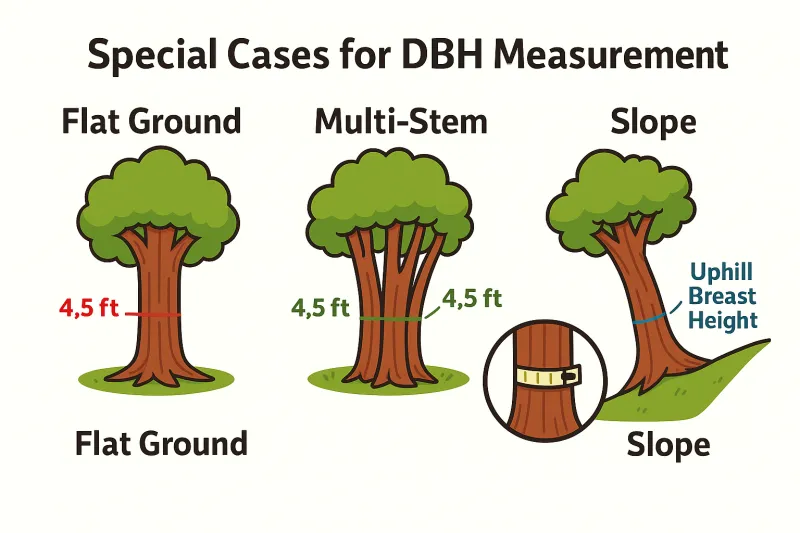
A certified arborist measuring tree diameter at breast height (DBH) – the first step in calculating tree value using the CTLA Trunk Formula Method

Environmental Benefits: Quantifiable Value Beyond Aesthetics

Our Tree Value Calculator goes beyond basic monetary value to include environmental benefits that can be quantified and monetized. Here’s how your trees contribute to the environment and your bottom line:

Carbon Sequestration

Trees actively remove carbon dioxide from the atmosphere through photosynthesis. How much depends on the tree’s size, species and health. For the 30-inch oak in the example below, our calculator’s rough estimate is about 97 pounds of CO₂ a year (about $12). For a science-based number for your own tree, use the free USDA Forest Service i-Tree MyTree tool.

Stormwater Management

Trees intercept significant rainfall, reducing runoff and alleviating pressure on municipal stormwater systems. For the 30-inch oak in the example below, our calculator’s rough estimate is about 9,070 gallons a year (about $91). i-Tree MyTree gives a science-based estimate for your own tree.

Energy Savings

In places with hot summers, shade trees on the west and south sides of a home can lower air conditioning use. How much depends on the tree’s size and placement. i-Tree MyTree gives a science-based estimate for your own tree.

Property Value Increase

Well-maintained trees can raise property values by up to 15% (Purdue Extension). An appraiser keeps a tree’s value reasonable for the property it is on.

Example: Calculating the Value of a 30″ Red Oak

Let’s examine a real-world example of how our Tree Value Calculator assesses a typical 30-inch diameter red oak tree in good condition, strategically placed on a residential property:

CTLA Trunk Formula Calculation:


  • Size Measurement: 30″ diameter = 706.9 square inches of trunk area (π × 15² = 706.9)
  • Unit Tree Cost: $43.00 per square inch (Mid-Atlantic ISA chapter, 2021; rates vary by region), so the basic cost is 706.9 × $43.00 = $30,395
  • Species: not a separate factor in the current (10th edition) method
  • Condition Rating: 90% (Good health, structure, and form)
  • Functional Limitations: 85% (Well placed for shade, with somewhat limited root space)
  • External Limitations: 100% (no outside problems)
  • Appraised Value: $23,252 (706.9 × $43.00 × 0.9 × 0.85 × 1.0), or about $23,000 rounded

Annual Environmental Benefits:


  • Carbon Sequestration: $12/year (about 97 lbs CO₂)
  • Stormwater Management: $91/year (about 9,070 gallons)
  • Energy Savings: $227/year (for a 70-foot tree)
  • Property Value Increase: $204/year (assessed as annual benefit)
  • Total Annual Benefits: $533/year (rough estimates from our calculator’s simple model, not measured values; for a science-based number, use i-Tree MyTree)

This analysis shows that a single mature red oak tree represents an asset worth about $23,000 in replacement cost, with rough annual benefits of about $530. Over 40 more years, those benefits would add up to about $21,300 (not accounting for inflation or increasing environmental service values).

How to Maintain and Maximize Your Trees’ Value

To ensure your trees maintain and even increase in value over time, follow these professional arboricultural recommendations tailored to your area’s climate and growing conditions:

  • Schedule Professional Assessments: Have your trees inspected by a Grant Brothers Tree Service Certified Arborist every 3-5 years to identify potential health issues early and develop a tree management plan.
  • Invest in Proper Pruning: Engage professional tree trimming services to maintain structural integrity, remove branches that pose a risk, and improve aesthetics. Climates with humid summers and occasional ice storms require specialized pruning approaches.
  • Apply Correct Mulching Techniques: Use 2-4 inches of organic mulch around trees (keeping it 2-3 inches from the trunk) to retain moisture, reduce competition from grass, and improve soil health. In clay soils, proper mulching is essential for root health.
  • Protect Critical Root Zones: Avoid compacting soil in the root zone, typically extending to the tree’s drip line or beyond. This is particularly important during construction projects, which can severely damage valuable trees.
  • Implement Strategic Planting: When adding new trees, select species appropriate for your climate zone (for example, USDA zone 7a/7b) and place them where they’ll provide maximum benefits like summer shade on west-facing walls or winter wind protection from northwesterly winds.
  • Monitor for Regional Pests: Be vigilant for the tree pests and diseases common in your region. In much of the eastern U.S., they include Emerald Ash Borer, spongy moth (formerly gypsy moth) and oak wilt, a fungal disease of oaks. Early intervention by a certified arborist can save valuable trees from these devastating threats.

Try Our Professional Tree Value Calculator Today

Understanding the value of your trees is the first step in appreciating and protecting these valuable assets. Our advanced Tree Value Calculator at the top of this page helps you estimate both the monetary value and environmental benefits of your trees using the industry-standard CTLA Trunk Formula Method.

Conclusion: Trees as Appreciating Assets in Your Landscape

Trees are unique landscape elements that literally grow in value over time. By understanding and documenting this value through our Tree Value Calculator, homeowners can make better decisions about tree care, preservation, and protection.

While this article and calculator provide valuable guidance, the most accurate tree valuations come from professional assessments. If you need a detailed valuation of your trees for insurance, legal, or property purposes, contact Grant Brothers Tree Service for a comprehensive tree evaluation by our Board Certified Master Arborists, who understand how climate, soil and site shape a tree’s value.

Protect Your Valuable Trees with Professional Services

About the Author

References and Further Reading

  1. Council of Tree and Landscape Appraisers. (2018, revised 2020). Guide for Plant Appraisal, 10th Edition. International Society of Arboriculture.
  2. U.S. Forest Service. (2024). i-Tree Tools for Assessing and Managing Forest and Community Trees. https://www.itreetools.org/
  3. Fairfax County, Virginia – Public Works and Environmental Services. (2024). The Benefits of Planting Trees. https://www.fairfaxcounty.gov/publicworks/benefits-planting-trees
  4. National Forest Foundation. (2024). A Breath of Fresh Air: How Trees Help Mitigate Climate Change. https://www.nationalforests.org/blog/a-breath-of-fresh-air-how-trees-help-mitigate-climate-change
  5. Mid-Atlantic Chapter, International Society of Arboriculture. (2021). Tree Appraisal Guidelines for the Mid-Atlantic Region. https://www.mac-isa.org/images/pdfs/TreeAppraisalGuidelinesfortheMidAtlanticRegion.pdf
  6. Purcell, L. Purdue Extension. Tree Appraisal and the Value of Trees (FNR-473-W). https://www.extension.purdue.edu/extmedia/FNR/FNR-473-W.pdf
  7. Grant Brothers Tree Service. (2025). Professional Tree Services. https://virginiatreecare.com/

Frequently Asked Questions About Tree Value

A tree’s value depends on its species, trunk size, condition and location, which arborists measure with the CTLA Trunk Formula Method. For example, a healthy 30-inch diameter oak could be worth $15,000 to $25,000 (about $23,000 at $43 per square inch, 90% condition and 85% functional limits), and the Tree Value Calculator on this page estimates what your tree is worth.

How much is my tree worth?

A mature tree’s value depends on species, size, condition, and location. For example, a healthy 30-inch diameter oak tree could be worth $15,000 to $25,000 using the CTLA Trunk Formula Method (about $23,000 at $43 per square inch, 90% condition and 85% functional limits). Our Tree Value Calculator can provide an estimate based on your specific tree’s characteristics.

How do arborists determine tree value?

Professional arborists use the Council of Tree and Landscape Appraisers (CTLA) Trunk Formula Method, which multiplies trunk area by a unit tree cost, then adjusts for condition, functional limitations and external limitations (CTLA Guide for Plant Appraisal, 10th edition). The older 9th edition also used a species rating; the current edition does not. This industry-standard approach provides consistent valuations for insurance, legal, and property purposes.

Can trees increase my property value?

Yes. Purdue Extension notes that healthy, well-placed trees can raise a property’s value by up to 15%. An appraiser keeps the tree’s value reasonable for the property it is on.

What’s the most valuable tree species?

In many U.S. landscapes, native oak species (particularly White Oak and Red Oak) typically have the highest value due to their longevity, structural strength, disease resistance, and significant environmental benefits. Other high-value species include Black Walnut, Sugar Maple, and American Beech.

Who can help assess the value of my trees?

For accurate tree valuations, consult with a Board Certified Master Arborist who has completed Tree and Plant Appraisal Qualification (TPAQ) training. Grant Brothers Tree Service, based in Virginia, provides professional tree assessments and valuations, conducted by certified arborists with specialized training in tree appraisal.