


Tree Branches Hanging Over Roof? (Your Insurance Might Cancel Your Policy)
You’d think something like tree branches hanging over your roof would be a pretty low-priority issue. The tree’s been there for years, nothing has fallen, and the house looks fine.
Then an insurance letter shows up out of nowhere, and suddenly those branches are a big deal.
The notice warns that your homeowners insurance could be canceled or not renewed if the trees aren’t trimmed, and now you’re left wondering how this even became an issue in the first place.
This is becoming surprisingly common.
Insurance companies are tightening their rules, using drive-by inspections and drones, and flagging roofline problems that used to slide under the radar.
Overhanging branches are one of the easiest things for them to spot, and one of the fastest reasons they give homeowners deadlines to act.
In this post, we’ll explain why insurers care, how serious these notices can be, and what actually needs to be done.
Why Do Insurance Companies Care About Tree Branches?
Insurance companies are always worried about risk.
Anything that increases the chance of a claim gets flagged, and trees hanging over roofs check multiple risk boxes at once.
First, there’s storm damage. Even a healthy branch can snap during high winds or heavy rain. When it falls, it often lands right on shingles, gutters, or skylights.
That’s an expensive claim waiting to happen, and insurers would rather prevent it than pay for it.
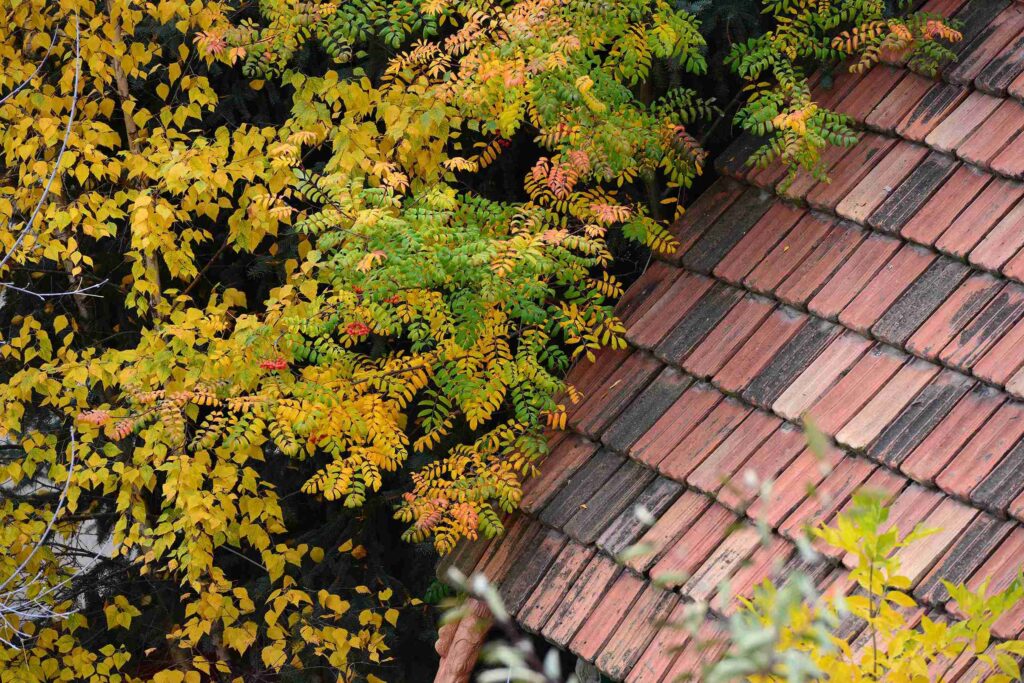
Next comes constant contact. Branches brushing against the roof might seem harmless, but over time they scrape away protective layers on shingles. They also drop leaves, needles, and debris that trap moisture.
Moisture leads to rot, mold, and shortened roof life, which again circles back to claims.
There’s also the fire risk angle in some areas.
Branches close to roofs can act like a bridge for fire, especially during dry seasons or in windy conditions. Even if fires aren’t common where you live, insurers still factor that possibility into their decisions.
Also Read: Maple Tree Bark Splitting
Can Your Homeowners Insurance Cancel You For This?
Short answer, yes, they can. And they DO.
Most of the time, insurers don’t immediately cancel a policy. Instead, they send a notice saying your coverage is at risk unless the issue is fixed by a specific deadline.
That deadline can be surprisingly short, sometimes 30 days or less.
If the problem isn’t resolved in time, a few things can happen. Your policy might not renew at the end of its term. In some cases, coverage can be canceled mid-policy, depending on the wording in your agreement and local regulations.
What makes this extra stressful is that shopping for new insurance after a cancellation notice is harder and usually more expensive.
Other insurers see the non-renewal or cancellation and start asking questions.
Suddenly, that one untrimmed tree turns into a much bigger headache.
Signs Your Trees Could Put Your Insurance At Risk
A lot of homeowners assume they’re fine because nothing bad has happened yet.
Insurance companies don’t wait for damage, though. They focus on warning signs, and those signs are often pretty obvious once you know what to look for:
- Branches touching or resting on the roof
- Large limbs hanging directly above the roofline
- Trees rubbing against gutters, flashing, or shingles
- Heavy leaf or needle buildup caused by nearby branches
If you can stand in your yard and see branches hovering over the roof, an inspector or drone can see them too. Even branches that aren’t touching but are close enough to fall straight down during a storm can be flagged.
Also Read: My Crepe Myrtle Is Too Tall
How Much Clearance Is Usually Required?
There’s no single universal rule. Different insurance companies have different standards, and those standards can change over time.
That said, many insurers look for several feet of clear space between the roof and any tree branches. Some want at least six feet of clearance, others more.
The key point is that “almost touching” still counts as a problem in their eyes.
Branches overhanging the roof are usually treated more seriously than branches near the sides of the house. Insurers focus on what could fall straight down and cause immediate damage. Even strong, healthy trees don’t get a pass here.
If an insurance letter mentions trimming, it’s best to assume they expect noticeable clearance, not just a light haircut.
Should You Trim It Yourself Or Hire A Professional?
This is one of those decisions that looks simple until you’re actually standing on a ladder, holding a saw, and realizing how high that branch really is.
Small, low branches might be fine for a confident homeowner with the right tools.
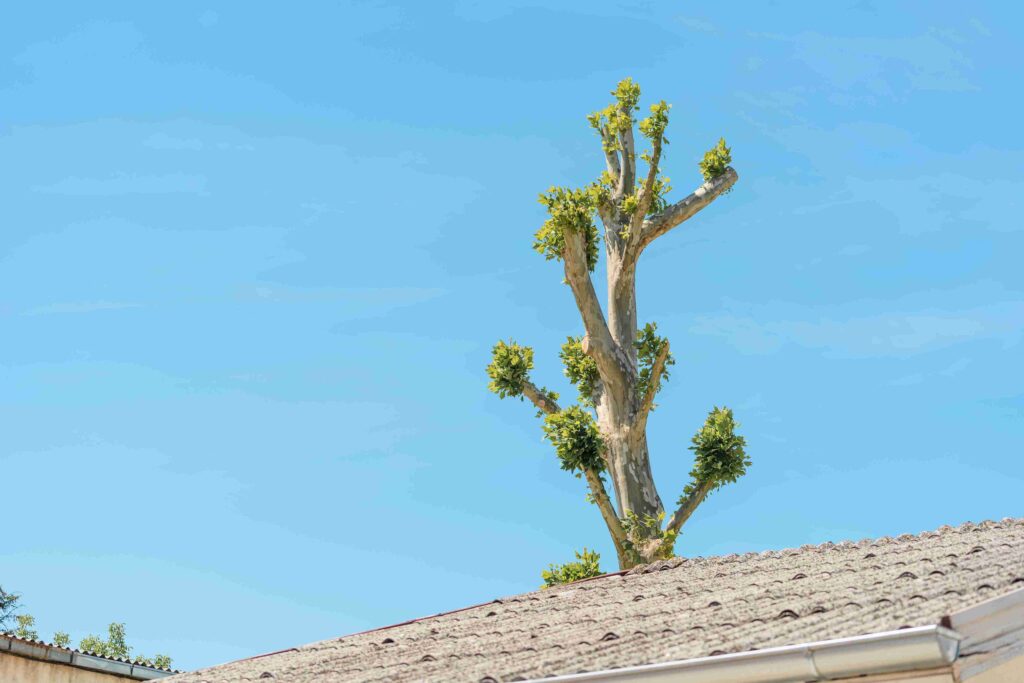
But roofline branches are a different story. They’re higher, heavier, and often positioned awkwardly over the house. One wrong cut can send a limb crashing down onto the roof, which defeats the whole purpose.
There’s also the insurance proof issue. Some insurers want photos showing the work was done properly. Others may ask for documentation, especially after a formal notice.
- Roof-level branches are harder and more dangerous to cut
- Improper trimming can damage the tree and the roof
- Professional work is often viewed more favorably by insurers
Hiring a professional costs more upfront, but it reduces risk and usually satisfies insurance requirements without back-and-forth emails or follow-up inspections.
How Quickly You Should Act After Getting An Insurance Letter
As soon as you get that letter, the clock is ticking. Even if the deadline feels far away, time disappears fast when scheduling tree work, especially after storms or during busy seasons.
Also Read: How Do I Get Rid Of Sumac Trees?
Insurance companies usually expect action, not just plans. Calling someone for an estimate is a good start, but it doesn’t stop the deadline.
They want the branches trimmed and the risk reduced.
Once the work is done, take clear photos from multiple angles. Show the roof, the cleared space, and the surrounding trees. Keep copies of any invoices or receipts.
If your insurer asks for proof, having everything ready makes the process smoother and less stressful.
Waiting until the last minute adds unnecessary pressure.
Acting early gives you breathing room and options if something gets delayed.
Bottom Line
Tree branches hanging over your roof might seem like a minor issue, but insurance companies see it as a serious risk. That’s why so many homeowners are getting warning letters and cancellation notices tied to roofline clearance.
The good news is that this problem is fixable.
Trimming branches before they cause damage protects your roof, your home, and your insurance coverage.
It also helps you avoid scrambling for a new policy or paying higher premiums later.
If you’ve already received a letter, don’t panic, but don’t ignore it either. Take action, document the work, and get ahead of the issue.
A little trimming now can save you a lot of frustration down the road, and that’s a trade most homeowners are happy to make once they see the bigger picture.


