

Tree Growing Leaves On Trunk (Here’s Why)

Have you noticed small green leaves or shoots popping out of your tree trunk?
It can look a little strange, especially if the tree usually grows leaves only on its branches.
The good news is that this growth is often a normal response to changes in the tree or its environment.
Trees have ways of producing new growth when they lose branches, experience stress, or get access to more sunlight. However, sudden changes in growth can sometimes point to an underlying problem.
In this post, we’ll shed some light on why your tree is growing leaves on trunk, when this is normal, and what you can do to keep your tree healthy.
Why Is My Tree Growing Leaves On The Trunk?
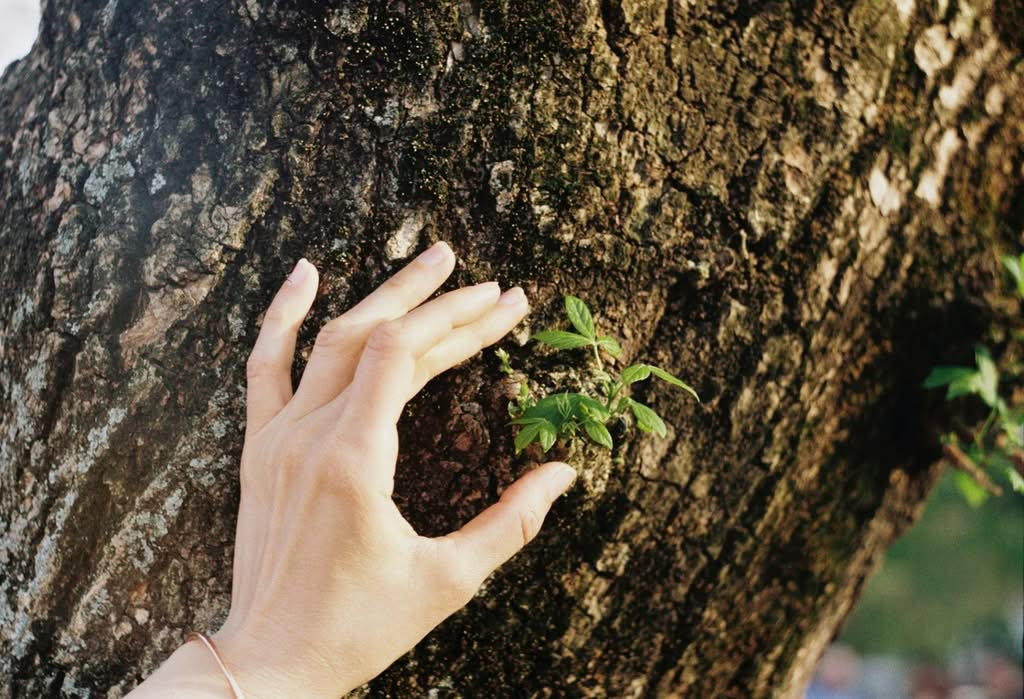
Your tree is growing leaves directly on its trunk because dormant buds hidden deep underneath the bark have activated to generate emergency energy.
These tiny sprouts are botanically known as epicormic shoots (gardeners call them water sprouts or suckers).
Underneath the bark, trees keep small, sleeping buds that can sit quietly for years.
On a normal, healthy tree, natural growth signals travel down from the top branches and tell these lower buds to stay asleep. This keeps the tree focused on reaching upward and spreading out its main canopy where it can catch the most light.
When a tree runs into trouble, that balance changes.
The chemical signals keeping those lower buds asleep get cut off, and the dormant buds wake up. The tree pushes new shoots and leaves right through the bark to quickly make up for lost energy or protect itself.
Also Read: Can You Plant a Tree in the Same Spot After Removal?
What Triggers Them?
Those sleeping buds need a clear reason to start growing. Here are the most common reasons:
#1 Losing Upper Branches
Leaves are basically solar panels that make food for the tree.
If high winds snap large limbs, pests eat away the canopy, or someone cuts back too much of the top, the tree suddenly cannot make enough food to support itself.
To keep its trunk and root system from running out of energy, the tree wakes up dormant buds along the trunk and puts out fresh leaves as fast as it can.
#2 Sudden Exposure To Sunlight
Trunks usually spend their days hidden under the shade of the upper limbs.
But if a neighboring tree gets taken down, or if you trim off a few large lower branches, bright sunlight can hit patches of bark that have been shaded for a long time.
Light sensors just under the bark notice the difference, and the tree takes advantage of the extra light by sprouting leaves right along the trunk.
Also Check Out Our: Free Tree Symptom Checker
#3 Root Damage Or Severe Drought
Getting water from the soil all the way up to the highest leaves takes a lot of effort.
If roots get crushed by heavy equipment, dried out during a dry spell, or damaged during yard work, the tree struggles to pump water all the way to the top.
Because of that, the upper leaves may start to dry out and drop.
So the tree starts growing leaves lower down on the trunk where moving water is much easier.
#4 Interrupted Growth Hormones
Healthy trees balance their growth using hormones produced at the very tips of the top branches. These hormones move down through the inner bark and keep the lower buds from waking up.
That hormonal flow can get blocked for things like:
- A mower cuts into the trunk
- An animal chews the bark
- Rot sets in
Once the signal stops reaching the trunk, those sleeping buds wake up and start pushing out leaves.
#5 Aging
As trees get older, their internal systems naturally slow down and become less efficient.
Pumping water dozens of feet into the air gets harder, so the tree often lets its topmost branches die back to save energy.
To keep going, the tree starts growing fresh leaves lower down on the main trunk and heavy limbs where it can support them more easily.
Is It Normal For A Tree To Grow Leaves On Its Trunk?
No, it is not something you see on an entirely healthy, thriving tree.
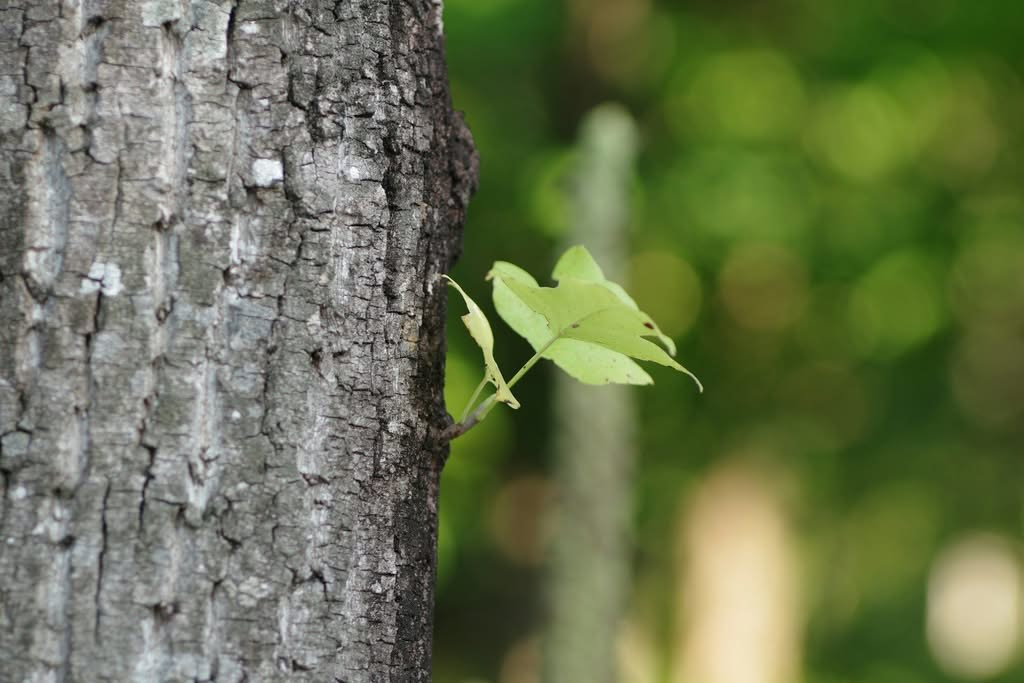
Under good conditions, a tree puts all its energy into the main upper canopy and keeps the trunk clear. Trunk growth is usually a symptom of an underlying issue rather than a problem on its own.
However for some trees, like maples or oaks, a handful of trunk leaves after a light trim is completely harmless.
But if a tree suddenly puts out a thick ring of leaves all along the trunk, it usually means the upper crown is struggling or the roots are under stress.
Also Check Out Our: Tree Pruning Services in Northern VA
Should You Remove Leaves On A Tree Trunk?
Yes, you should usually prune off leaves and small branches growing on the trunk, but you must address the root cause of the tree’s stress before grabbing the shears.
Removing them keeps the trunk clean and stops weak, poorly attached limbs from turning into hazardous branch failures later on.
However, if your tree recently lost most of its upper canopy in a storm, you should actually leave those trunk sprouts alone for a season so the tree can feed itself while recovering.
How To Help A Tree Growing Leaves On Its Trunk Stay Healthy
You can help your tree recover by reducing environmental stress and giving its root system the gentle TLC it needs to rebound.
Since trunk shoots are essentially a cry for help, fixing the underlying problem is the only way to stop them from coming back year after year.
Start by laying down a 2-3 inch layer of organic wood mulch around the base to keep the soil cool and moist, making sure you leave a few inches of bare space right around the trunk flare.
Make sure to water the tree deeply around its drip line during dry spells.
Also hold off on heavy chemical fertilizers, which force rapid growth that a stressed tree cannot handle.
When Should You Worry?
You should worry when trunk sprouts appear alongside:
- Dead upper branches
- Oozing bark wounds
- Hollow cavities
- Fungal conks growing near the root flare
If the very top of your tree looks like a barren skeleton, the upper canopy is dying.
That level of decline means the tree’s structural integrity is compromised, and large limbs could come crashing down during the next summer thunderstorm.
Bottom Line
Leaves growing directly on a tree trunk are called epicormic sprouts (or water sprouts) and are caused by tree stress, structural damage, sudden exposure to sunlight, or root loss.
When a tree’s upper canopy is compromised by disease, drought, or over-pruning, dormant buds beneath the bark activate as an emergency survival mechanism to produce energy through photosynthesis.


