

What Happens If You Don’t Prune Crepe Myrtles?

Crepe myrtles are a favorite in many American yards, thanks to their colorful summer flowers, attractive bark, and relatively easy care.
But if you’ve planted one in your yard and haven’t touched the pruning shears in years, don’t panic. Your tree might be doing perfectly fine on its own!
Crepe myrtles don’t need to be trimmed every year to stay healthy or produce flowers.
In fact, leaving them alone can help preserve their natural shape.
Still, as the tree grows, you might notice a few changes that make occasional pruning worthwhile.
In this post, we’ll explain what happens if you don’t prune crepe myrtles and when it’s actually a good idea to grab those shears.
#1 Your Crepe Myrtle May Grow Larger and Wider
Without regular pruning, a crepe myrtle just keeps doing what it does best. It stretches up and out until it reaches the size its variety was meant to hit.
Some stay small and bushy, others turn into real trees that can hit 20 – 30 feet!
The canopy spreads wider too, giving you more of that soft, rounded look instead of the tight little stub people create with topping.
In a big open yard this can feel wonderful. The tree fills the space with shade and flowers without you having to force it into some artificial shape.
Of course that size depends on the cultivar you planted in the first place.
Also Read: Tree Growing Leaves On Trunk
#2 Your Tree Can Still Produce Plenty Of Flowers
Skipping annual pruning doesn’t mean you’ll end up with a flowerless crepe myrtle.
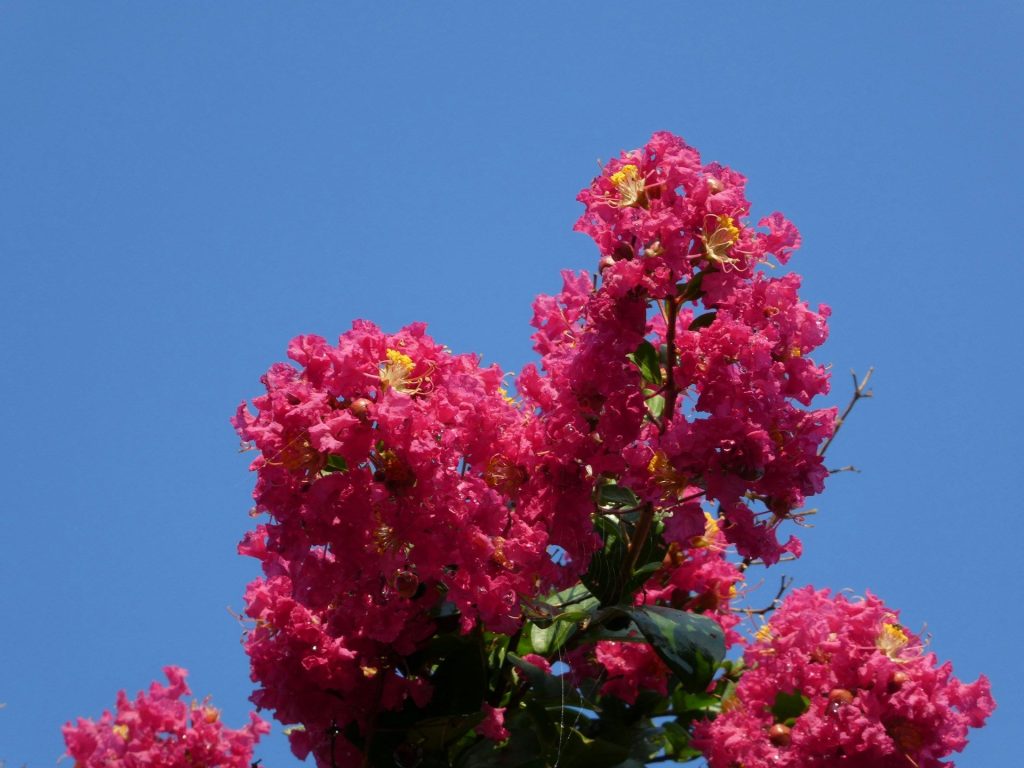
Crepe myrtles produce flowers on new growth, which means healthy trees can bloom beautifully without having their branches cut back every winter.
If your tree receives plenty of direct sunlight and grows in suitable conditions, it can produce impressive clusters of blooms without regular trimming.
On the other hand, excessive pruning can encourage lots of fast-growing shoots and leave the tree with an unnatural shape. It doesn’t guarantee more flowers, either.
If your crepe myrtle isn’t blooming well, look at its growing conditions before reaching for the pruning shears.
#3 Your Tree May Outgrow Its Available Space
This one is real if the tree was planted in the wrong spot.
A tall variety stuck under power lines or right next to the house will eventually push into places you do not want it. Branches can start brushing the roof or hanging over the driveway.
That is less about pruning and more about choosing the right plant for the location from day one.
When a crepe myrtle has room to reach its natural size, the extra growth feels generous. When it does not have room, you end up wishing you had picked a dwarf type instead.
Planning ahead saves a lot of future headaches.
Also Check Out Our: Northern VA Pruning Services
#4 Dead Or Damaged Branches May Remain On The Tree
Nature is not perfect. Storms snap limbs. Old wood dies off. Insects or disease can take out a branch here and there.
If you never walk around the tree with a pair of clippers, those dead pieces just hang there.
Broken branches can also hang awkwardly or become a concern if they’re positioned above walkways or areas where people gather. So removing damaged wood is an important part of maintaining a tree.
Check your crepe myrtle occasionally, especially after strong winds or storms.
Remove small problem branches with appropriate tools, and consider hiring an arborist if a large limb is damaged or difficult to reach safely.
#5 The Branches May Become Crowded
As your crepe myrtle grows, branches may cross, overlap, or rub against one another.
This can make the canopy look crowded and create wounds where the branches repeatedly scrape together.
A crowded canopy isn’t automatically unhealthy, so there’s no need to thin the tree simply because it looks full. However, branches that rub together or grow awkwardly through the center may benefit from selective removal.
Removing a few poorly positioned branches is often enough, and cutting away large amounts of healthy growth usually isn’t needed.

Also Read: Tree With Split Trunk
#6 Your Tree May Develop A More Natural Shape
This is the big payoff that makes hands-off gardening completely worth it.
Unpruned crepe myrtles grow into graceful, vase-shaped wonders with sweeping branch lines that look gorgeous against a winter sky.
You also get to enjoy one of their greatest hidden features: the trunk bark.
As trunks mature naturally without big ugly pruning scars or knobby knuckles, the outer bark peels away in thin ribbons to reveal smooth, rich layers of cinnamon, cream, and warm gray underneath.
Hacking the tree back ruins this entirely, but letting it grow lets that sculptural wood shine.
#7 The Tree May Become Harder to Manage
Although leaving your crepe myrtle alone can work well, an older tree may become harder to manage if it grows beyond the space available.
You might need a ladder or a long-handled tool just to clean up a few dead tips.
Starting with light maintenance while the tree is younger keeps the structure open and easier to work with as it ages. Even then, most crepe myrtles stay low-maintenance compared with many other landscape plants.
The “harder to manage” feeling usually only shows up when someone has ignored the tree for a decade and then decides it needs a complete overhaul.
Do Crepe Myrtles Need to Be Pruned Every Year?
No, healthy crepe myrtles generally don’t need annual pruning. These plants are tough and flower reliably without yearly intervention.
The only real reasons to prune are practical ones:
- Remove dead or crossing wood
- Take out suckers at the base
- Reduce height when a branch is rubbing against something it should not touch.
Heavy annual topping creates more work over time because it forces a flush of weak new shoots that then need cleanup themselves.
A light touch every few years is plenty for most trees.
Some gardeners go years without cutting anything at all and still enjoy full blooms and healthy growth.
When Should You Prune Crepe Myrtles?
Late winter or early spring is generally a good time to prune crepe myrtles when necessary, before new growth begins.
The bare branches make it easier to see the tree’s structure and identify problem areas.
Focus on removing dead, damaged, crossing, or poorly positioned branches. If you need to maintain clearance around a walkway or building, make careful cuts that preserve the tree’s natural form.
Avoid severe cutting that leaves large stubs. Also, remember that pruning needs can vary with your local climate, the variety you’ve planted, and the tree’s condition.
Bottom Line
If you don’t prune crepe myrtles, they can still grow well, produce plenty of flowers, and develop an attractive natural shape.
The biggest changes are usually their size, branch structure, and how much space they occupy.
Rather than trimming your tree every year out of habit, inspect it occasionally and prune only when there’s a good reason. With enough room, adequate sunlight, and proper care, your crepe myrtle may need far less maintenance than you think.


