

Tree With Split Trunk (What To Do)

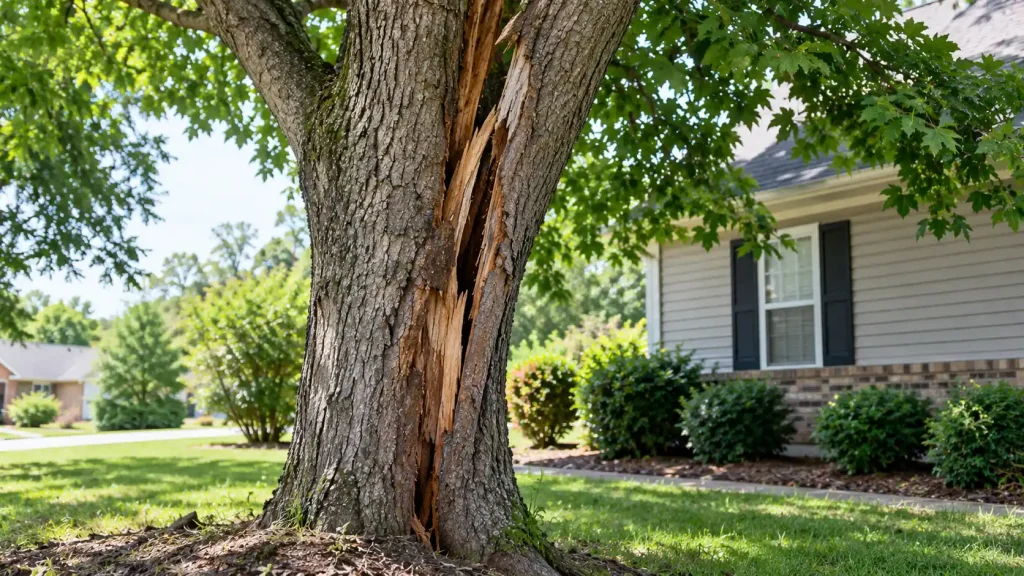
Finding a split in your tree trunk can be worrying, especially if the tree is large or sits close to your house.
You might wonder if it can recover, if you need to cut it down, or if there’s a way to fix the damage before it gets worse.
The good news is that not every split trunk means the tree is doomed. Some trees can be saved with proper care, but others may have structural damage that makes them dangerous to keep.
In this post, we’ll explain how you can save a tree with a split trunk.
Can A Tree With A Split Trunk Be Saved?
Yes, a tree with a split trunk can often be saved, provided the crack is relatively fresh, the wood beneath the bark is still healthy, and at least half of the trunk remains intact.
Timing makes a massive difference here.
When you catch a clean crack early before bugs, fungi, and rot take up residence inside the opening, an arborist can usually stabilize the trunk with bolts and supportive canopy cables.
However, if the crack reaches deep underground into the primary root flare, or if the interior wood is crumbly and hollowed out from years of hidden decay, the chances of rescuing it are very low.
Small, clean splits on young, vigorous trees usually bounce back surprisingly well with quick intervention.
Also Check Out: Tree Risk Self-Check
How To Tell How Serious A Split Trunk Is
Start by looking at the location and appearance of the split.
A shallow crack limited to the bark is generally less concerning than a deep opening that exposes the wood underneath. A split where two large stems meet can also be serious because it may affect the tree’s ability to support its own weight.
Pay attention to these warning signs:
- The crack is widening or extends deep into the trunk.
- One side of the tree is leaning or moving unexpectedly.
- Large branches are hanging loose or partially broken.
- The soil around the base is lifting, cracking, or shifting.
If you notice any of these signs, keep people away and arrange a professional inspection. Don’t climb the tree or attempt to test how stable it is by pushing or pulling on it.
How To Repair A Split Tree Trunk
Most arborists will recommend:
- Selective pruning to reduce excessive branch weight
- Cabling and bracing to support certain weak trunk unions
These support systems can help limit movement in suitable trees, but they aren’t appropriate for every situation. A severely separated trunk or extensive internal decay may make removal the safer option.
Avoid wrapping the trunk tightly with rope, driving nails into the split, or filling the crack with cement.
These approaches don’t reliably restore the tree’s strength and can create additional problems.
Also, don’t apply wound paint or sealant in an attempt to close the crack. Trees naturally respond to injuries by forming new tissue around damaged areas, and covering wounds generally doesn’t speed up this process.
Also Read: Tree Growing Leaves On Trunk
Can A Split Tree Trunk Heal On Its Own?
No, because trees compartmentalize damage rather than regenerating identical lost tissue.
Once wood fibers tear apart, those specific severed cells remain separated forever.
What healthy trees do instead is grow an entirely new layer of callous wood, often called wound wood, along the outer margins of the tear.
If the trunk is clamped tightly and cannot wobble, this new layer will slowly roll across the seam over several growing seasons, creating a protective woody band-aid that keeps moisture and insects out.
But if the two halves keep flexing and rubbing every time the wind blows, that delicate new tissue tears repeatedly, leaving the door wide open for fungal spores and hollow rot.
Should You Cut Down A Tree With A Split Trunk?
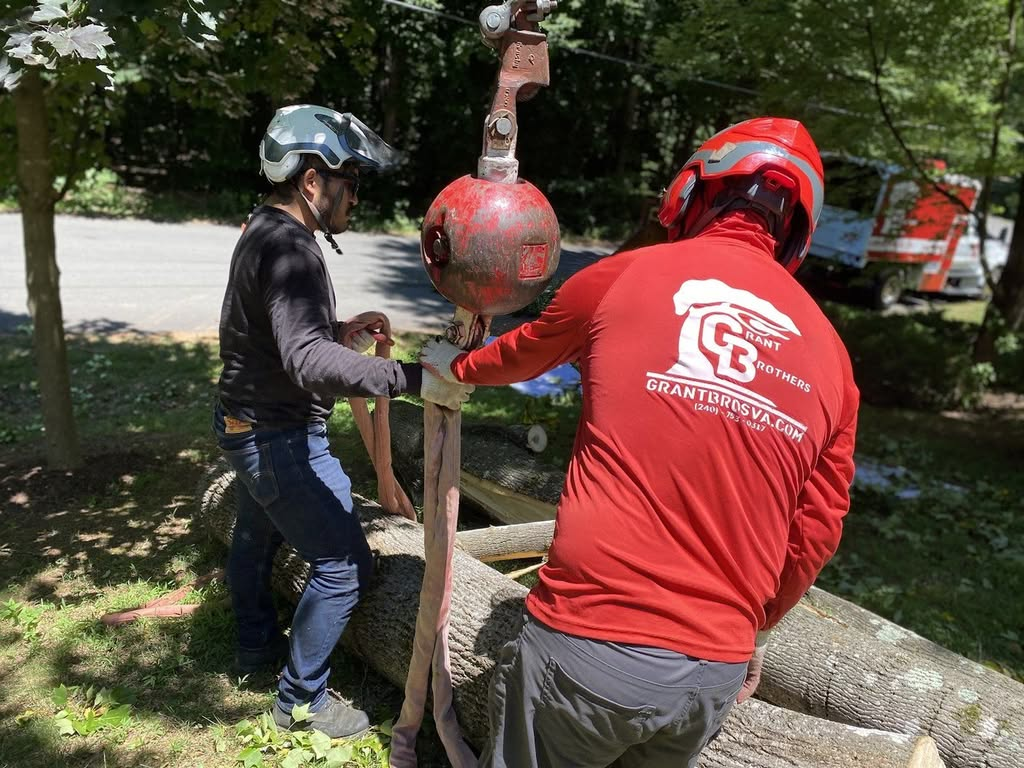
You should cut down a split tree whenever the split trunk poses a clear, immediate hazard to people, houses, driveways, or utility lines, or whenever rot has consumed more than a third of the inner wood.
A cracked tree sitting out in the middle of a five-acre pasture can slowly decline without putting anyone in danger, making it fine to leave as a wildlife habitat.
That exact same cracked tree hanging right over your children’s bedroom or your parked car, however, is a dangerous liability.
Also Check Out Our: Tree Removal Services in Northern VA
If an arborist takes one look and tells you the tree cannot be bolted reliably, taking it down is far cheaper and safer than dealing with a collapsed roof later.
What Causes A Tree Trunk To Split?
A tree trunk splits when physical pressure, bad structural growth, or extreme temperature swings overwhelm the wood’s natural strength.
Most often, it comes down to poor growth habits, especially when two main stems grow close together in a tight V-shape.
Trapped bark between those stems prevents them from bonding, creating an invisible weak point. When heavy winds, thick ice, or wet snow weigh down the upper branches, that extra leverage easily pulls the stems apart.
Decades of uneven branch weight and hidden fungal rot can soften the wood from the inside out, too.
On top of that, sudden winter temperature drops cause moisture in the bark to freeze and expand rapidly (sometimes called frost cracks) cracking the trunk along its weakest line.
Bottom Line
If a tree trunk splits, you should immediately contact an arborist to assess its structural stability.
A split trunk is a serious hazard that can lead to sudden collapse.
Depending on the severity of the damage, the tree will require either professional cabling and bracing to reinforce the split, or complete tree removal if the structural integrity is entirely compromised and poses a safety risk to nearby structures.
Do not apply wound paint or sealants, as these trap moisture and accelerate internal decay.


